
 22 April 2026 | 15:51
Iliana Iotova: Public Media Do Not Simply Record Events in Silence, but Are Active Participants in Democratic Processes
Quality journalism is done by courageous journalists, but also with resources that guarantee economic and political independence, says the President at the European Broadcasting Union's Media Summit
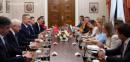
When the blows to the foundations of democracy are incessant, and the economic, financial and political pressure on the media is increasingly insistent, the community of journalists must remind in a united voice that if free and independent journalism is under threat, citizens lose their own independence and their own freedom. To remind that public media do not simply record events in silence, but are active participants in the processes. This was stated by President Iliana Iotova at the official opening of the Media Summit of the European Broadcasting Union (EBU), which is being held in Sofia for the first time. The forum brings together public media leaders and professionals in the field of radio, television and digital media from all over Europe, and this year 150 delegates from 47 media organisations are participating.
In her welcoming address to the participants, Iotova pointed out that freedom of speech, the right to reliable information, and the independence of the media are not achievements given once and for all, although recorded in a number of documents, but we must fight for them every day - society, institutions, and journalists. Economic, financial, and political pressure often go hand in hand. The question even arises whether the media can exist if there is no financial patronage or dependence on political representation - when they are financed by parliamentary majorities or by the government, the president added.
The head of state emphasised that the audience of public media does not consist of ordinary users of services, but of citizens with a clear conscience, thinking not only about their own survival, of people who need truth and objectivity. At the same time, the commitment of public media to serve the benefit of citizens is extremely difficult today, when the international legal order is changing before our eyes, basic human rights, fought for decades, are being trampled. The environment is fertile for populism, for speculation with the natural fears and anxieties of people, Iotova said. She also outlined another challenge facing public media - the unequal competition of social networks and the temptation of many politicians to create their own channels of communication.
In the complex times we live in, it is the public media that we rely on to be the guardians of the unbiased presentation of facts, in context, with in-depth analysis, which we need to navigate the world around us, the President said. She noted that in the tidal waves of the information flow, the role of the individual journalist - a master of words, who with knowledge and professionalism can translate complex processes to the audience, defend arguments and lead to the truth, is growing even more. There is no better remedy against fake news or propaganda that is displacing journalism, Iotova stressed. She stated that the media are a place for dialogue and with the positive claim to be a terrain where a rich palette of points of view, concepts, and visions in every sphere of life meet.
The head of state pointed out that new technologies, artificial intelligence, social networks are a test of critical thinking, but they are also a challenge to the ability of public media to be visible in the digital age. The audience is becoming increasingly demanding of the media and technological renewal is not a matter of choice, but of responsibility, Iotova said. According to her, digitalisation requires not only foresight, but also stable, predictable and adequate funding of public media. Quality journalism is done by courageous journalists, but also with resources that guarantee independence and prevent political and economic interference, said the president.
Iotova congratulated the directors general of the Bulgarian National Television and the Bulgarian National Radio for hosting the media summit in Sofia. She pointed out that over the years the European Broadcasting Union has established itself as a platform for the exchange of various news, cultural and sports events, enabling public media to share good practices and set standards. I believe that when public media set the tone for high professional standards, this will contribute to the recovery of the entire media landscape, Iotova pointed out.
The official opening of the media meeting was also attended by the Deputy Director General of the European Broadcasting Union Jean Philip De Tender, the Director General of the Bulgarian National Radio, Milen Mitev, and the Director General of the Bulgarian National Television, Milena Milotinova.
 Head of State Iliana Iotova Held a Meeting with Our Olympic Medallists in Natural Sciences and Their Leaders
 Head of State Iliana Iotova Holds a Meeting with EU Commissioner Ekaterina Zaharieva
 President Iliana Iotova Discussed EU's Next Multiannual Budget with Members of the European Court of Auditors
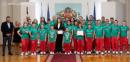 Iliana Iotova Awarded the President's Honorary Plaque to the Bulgarian Athletes from the World Championships for Athletes with Down Syndrome
 President: Bulgaria Has an Increasingly Significant Role in Strengthening the Security of the Black Sea Region



 2026 www.president.bg Administration of the President of the Republic of Bulgaria
Copyright and Legal Policy, Privacy and Security Policy, Helpful Information